
25. Analog espresso

It is no secret that I have a passion for old things - stuff that comes from an era when everything was made to last an eternity and serve the user, given that they took proper care of it.
Nowadays, it is the other way around, where we - users, serve our belongings, which are made to break or be disposed of after a certain amount of time. Going back to using analog devices is something like a rebellion against modern capitalist society in order to regain control of our unnecessary wastefulness, which has nowadays, sadly become the norm. Despite being critical about today’s society, I have to admit that I still have hope in people who take great care of things, and continue to innovate.
About a year ago, I got interested in coffee brewing - it all started when my mom gave me an old blade grinder and some coffee beans from Portugal. I ground them and brewed them using a moka pot, and the taste was unlike any coffee I had up until that point. It made me want to explore further and I started reading about coffee grinders and how they work. That quickly led to a purchase of a manual burr grinder which had a more even distribution of particles and made my coffee taste better. I continued to read about different brewing methods and read some books on coffee, like The World Atlas of Coffee by James Hoffman and Engineering Better Espresso by Robert McKeon Aloe. The most scientific of all brewing methods seemed to be espresso and there was also a lot of literature written about it. That seemed an interesting challenge for me, and I wanted to explore it.
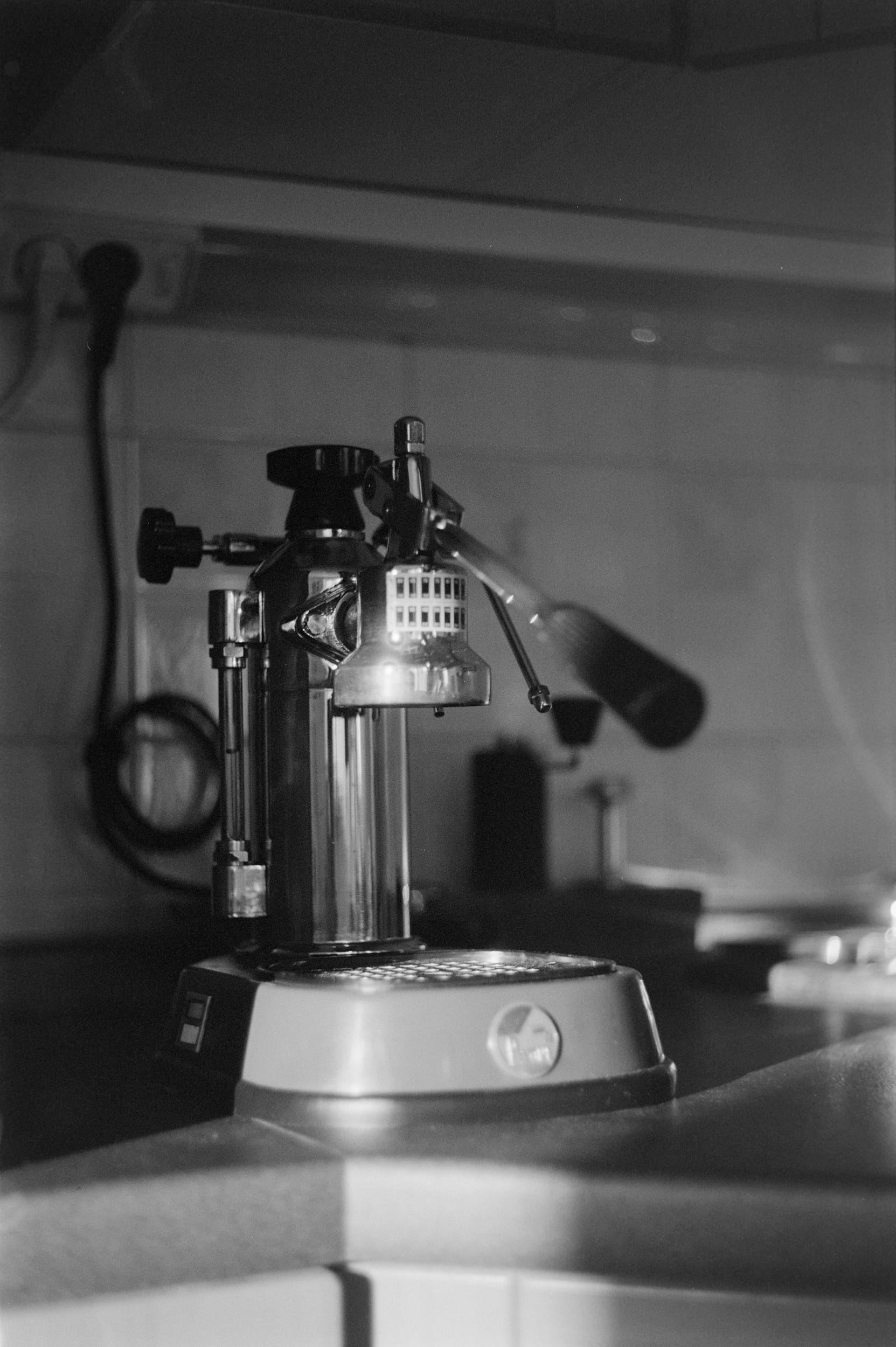
I searched for an espresso machine, and soon decided on a 1979 La Pavoni Europiccola. The machine had a lot of positive as well as quite negative reviews online due to its quirkiness in design and issues in overheating, so I wanted to see for myself whether I was up to the task to conquer it. After a month of waiting, a package from Italy arrived on my doorstep. The machine looked like it had seen better days, and inside, it was nasty. There was old coffee residue mixed with piston grease and it took a lot of love and care to get it back up and running.
I disassembled everything, replaced the seals and even broke some parts due to age which I had to source in local hardware stores. I also had to restore the heating element due to leaks and remove a ton of limescale. After that came the difficult part - learning how to make a good cup of coffee.
Espresso has a lot of variables, and tracking all of them as a beginner can be frustrating. Using a manual lever machine didn’t help much since it is less consistent in pressure and temperature control, or at least, a newbie user is.
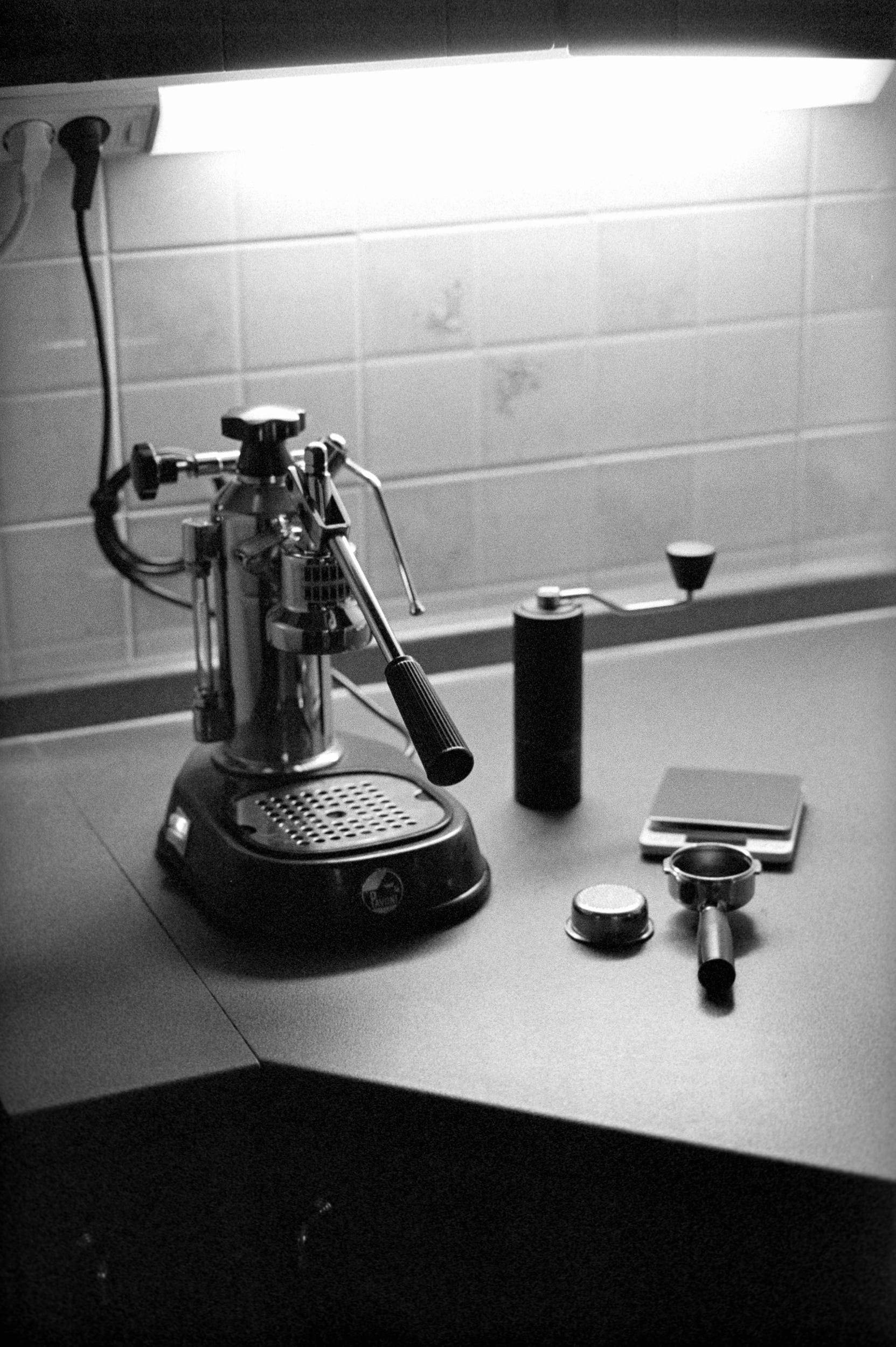
To speed up the learning curve, I tracked my espresso shots in an Excel sheet, along with the grind settings, dose, temperature, time, etc. I quickly found the optimal settings, and started to enjoy the process more and more since I didn’t need to track everything in Excel anymore. I also joined a Facebook group with the machine’s users and found a lot of helpful information. There are about sixteen and a half thousand members in the group currently with new members joining each day. They help keep these machines in working order and even manufacture new parts and mods for the old machines. It is not just a coffee machine, but a hobby in itself.
To describe the coffee making experience with the lever machine, it is like driving an old car with manual transmission and knobs. To keep track of all the variables, you have to concentrate, be attentive to its sound in order to estimate the boiler’s pressure, and keep a steady pull to keep a consistent pressure. Making a single espresso takes about fifteen minutes, and even though it’s a short drink, you learn to appreciate every part of that one sip. There are no shortcuts, and if you cut corners, the resulting coffee tastes bad. If you are patient however, the machine will reward you with coffee better than in most local cafe’s.
My favorite part of the day for me is the morning when I get to make a flat white for my girlfriend and a double espresso for myself. It is the first thirty minutes of the day when I get to wake up, build my concentration, and spend valuable time without using a smartphone.
La Pavoni looks like it was made to last, and there isn’t one part on it that is susceptible to breaking with rightful use. If I take care of it and replace the seals every so often, it will probably outlive me. But until then, it will serve me and many users around the world with the most enjoyable coffee and morning routine a home appliance has to offer.
We are on the same journey. I got a vintage lever Olympia Cremina and now I want to quit photography and become a barista.